Good morning everyone! My reader(s) will see that I have been quiet as of late including this last Friday. This last Wednesday we had to say goodbye to our dog Loki and I have needed sometime to process everything going on. I will likely be ‘out of the office’ for another week or two because to be honest, my heart just hasn’t been in my writing. Although my husband found the strength to post something, I have had struggles finding the words to express my feelings. I want this to be a memorial to him so a part of him can live forever out in the internet. I hope you can all respect my need to take some time to myself and spend it with my family.
This last Wednesday we said goodbye to our beloved Loki. After years of health struggles, it was discovered he had an insulinoma which means his body began to produce too much insulin and he could no longer maintain the glucose his body needed. The last couple of weeks we cared for him non-stop, even waking up multiple times throughout the night to give him sugar syrup, which I can confirm he fell in love with. While we had hoped we would have several more months with him, it seems his condition had already progressed to a point it could not be properly managed. We had to make the difficult decision to say goodbye to him but made sure he had the best last couple of days on this earth. We treated him to Pup Cups from Caribou Coffee, wheeled him around in a cart that he fell in love with since he could no longer go on walks, and brought him down to the Lakewalk for one last view of Lake Superior. In spite of extreme wind, I could tell he was truly enamored by the sight. We spent the evenings watching our favorite movies, including all of the Marvel films which featured his namesake. Watching movies as a family and cuddling was how we spent most evenings so it was truly how we wanted to remember our time together. And I got to make one last special meal for him consisting of a tasty steak. He was surrounded by loved ones including his two brothers (Thor and Anubis), his aunt and uncle, and his loving fathers. To say it has been hard would be an understatement. Our vet, Dr. Licht with Dougherty Veterinary Clinics has been an amazing comfort in helping take care of him and making herself available all of these years. Having been a frequent visitor there, the entire staff got to know him very well and I know he appreciated all of their kindness and care.
We adopted him more than 10 years ago and from the start he proved to be clever, mischievous, and wanted nothing more than to feel loved. Not everyone believes in love at first sight but I have been fortunate enough to have experienced that a couple of times. My husband was the first time, and he was the second one whom I experienced that with. It was he who made us a family and it was an honor to bring him into our new home, having just closed on our house at the time only a week earlier. Later that next year we brought in Thor because we felt he needed a companion and our love for them continued to grow. Eventually taking in Anubis, whom they both had known since he was just a pup. Despite being such a small dog (being part corgi) he somehow filled a room with his presence.
Years later it was he and Thor who would be the best men at our wedding. I still remember how he tried to eat all of the refuse at the Renaissance Festival where we married, and how he snuggled in my arms that day in the car.
He was my cooking buddy, sitting in the kitchen as I cooked waiting for me to drop something on the floor. He spent holidays with us, Christmas was always his favorite and this was part of the reason we kept the tree up to even this point as a reminder of those times. Halloween was probably his least favorite because we always insisted on setting him up in costumes. His first one we found a Chewbacca costume, but he looked far more like an Ewok. He also loved adventures, having escaped from our yard a couple of times which put me into a panic as I ran into the streets to find him.
It is these things that I miss, but also the simple things. Carrying him around because he felt needy and wanted to be held like a baby, often referring him to a hairy gummy bear. Holding out my hand for him to shake and he would thrust his paw down with so much enthusiasm you would think he had invented it. When I would leave the house he would sit at the top of the stairs like he would wait right there until I returned. And when I did he always had this look of pure love, like he was meeting me for the first time. Waking up the middle of the night to check on him, after having tucked each dog into bed with an individual good night. And when I began working from home, he found his place sharing my chair and it began one of his favorite places in the house.
Every day I miss him and I am reminded of him, somehow the house feeling so empty and dark without him here and even his brothers have noticed. But we continue to process this each day, crying and grieving and keeping his memory alive. I hope all other fur parents out there treasure every moment with their babies because to say good bye to them is like saying good bye to a piece of yourself.
Thank you everyone for all of your love and support at this time.

Friday the 13th: Recap of the Week
Good morning everyone and welcome back to the Breakroom! As a special post this week I decided to do a recap of some of the big stories this week that resonated with me, either because I found them interesting, personal, or simply that I feel they need to continue to be discussed into the future. I was hoping to do more of my business-related posts this week but unfortunately we are having some personal struggles here at the Breakroom as we are taking care of one of dogs who is seriously sick. I may go into more details in the future but as it is still recent and difficult as we figure out our daily routines with his care, I hope my reader(s) will understand.
Friday the 13th
I have always loved the concept of Friday the 13th, the idea that it is inherently unlucky, although did provide some pretty good storylines to the television series Charmed. I wanted to find a cool fact to share today about Friday the 13 and I am going to go with what is the term for having a fear of Friday the 13th? It is known as Paraskavedekatriaphobia for those who have an intense fear of this day. I have never known anyone who believed in it to that extent, for me it is sort of like reading the horoscope in the newspaper. A superstition you sort of want to believe so you try to find the patterns to make it real, even though part of you doesn’t. Does anyone here have this phobia or have known someone who did? Any stories on what they do during Friday the 13th? By no means do I want to take pleasure in someone’s fear or discomfort, but I do find it fascinating in learning how they cope and manage. Is it as simple as simply not leaving the house, or is it truly crippling for them and actually not easy to manage?
Bad Bunny Concert (aka the Super Bowl)
My Facebook feed on the first part of this week was full devoted to the halftime show at the Super Bowl on Sunday and his performance has gone down as one of the most inspirational and viewed. While I did not tune in on Sunday (not a fan of American football) I have made sure to watch clips of the show and can say I need to add Bad Bunny onto my music rotation. That being said, not everyone was a fan but I’m afraid all of the critiques I have been able to find seem to be tied to racists and bigots. Speaking of which, there was also an “alternative show” headlined by Kid Rock which despite being created for the pro-White, anti-People of Color community, it feels like the majority of people still tuned into Bad Bunny just so they could complain about it. Personally I think it was one of the most inspiring performances I have ever seen. While I am not part of the Latinx community, nor can I speak very much Spanish, I believe people are missing the point of what this was. Diversity is not to “wash away whiteness” as some say but it allows all us to share our stories and recognize that we are not all the same, which is sort of the point. So my emotional response is very much from being allowed to share in the experience and story that he as a performer was trying to share with us. And I’m afraid if you really had a problem with it, I’m going to reiterate that the only complaints I have found are tied to bigotry, meaning you are the problem. And to be more specific, I am going to specifically call out Representative Andy Ogles (R-Tenn.) who called for an investigation that declared this halftime show was an example of gay porn. I cannot even make that up and while he will likely never see this, I hope he knows I am specifically telling him that this was not an example of gay porn. It is simply an example that you are a bigoted individual who has no place working in politics if that is your reaction to this show. And for the record, I have not had many moments in my life that could be described as prompting me to feel “patriotic” but I can assure you that this performance is definitely one of those.
Amazon/Starbucks
Large corporate companies are in rare form these days, but I shouldn’t be surprised. Amazon recently announced it would be letting go of around 16,000 employees in an effort to save money (afford investing heavily into AI) but to also reduce bureaucracy at the company. Sounds legit, right? Then we have Starbucks who has gone to great lengths to suppress unionization of branches because they cannot afford it, and yet their CEO just had the cap lifted on how frequently they can use the private jet. That’s right, the CEO of Starbucks (Brian Niccol) uses the private jet to commute from California to Seattle. Strange that they can literally afford almost daily use of a private jet, but not to give their employees things like proper pay or staffing.
Safeguard American Voter Eligibility (SAVE America Act)
For those paying attention, the House Republicans have been pushing their so-called SAVE America Act in an effort to support voting security and prevent fraud. While this might sound like a good idea, the precise details of what they are proposing show that this could be considered voter suppression. One of the requirements is to provide a passport (which only around half the population owns) or else you must provide a birth certificate. So here are the problems we have here and why House Democrats are so opposed. The first is that many citizens do not have a passport with one such reason being the cost (around $130) not to mention the time and process that goes into securing one. Unless they are willing to reduce the cost to nothing and then provide initiatives on how to walk each person through getting one, this seems like you are trying to lock people out of voting. Then there is the birth certificate, which I will skip right over the fact that there are plenty of people who do not have a copy of their certificate. The key piece is that the name on your certificate must match your photo identification, which for many married individuals this does not. This is specifically punishing those who chose to take their spouse’s name when they married as many do not go through the process of having their birth certificate updated. Unfortunately, this truly does sound like voter suppression because it does nothing to help citizens meet these requirements, just punishes those who do not meet them. You cannot change these rules without making it easier for eligible citizens to achieve the criteria you are putting upon them.
Pam Bondi Testimony
Unfortunately the magic of the Super Bowl ended pretty quickly and was replaced by US Attorney General Pam Bondi being interviewed over her handling of the Epstein files. I watched a number of clips and read some articles an the consensus seems to be she wasn’t able to answer any simple yes and no questions, perjured herself when she was able to provide an “answer”, and apparently came with a “burn book” with insults catered to be thrown at those interviewing her. It was an embarrassment and incredibly difficult to watch and is a great example of what happens when someone is unqualified for a job is allowed to take it.
James Van Der Beek/Catherine O’Hara
Over the last couple of weeks we have lost two actors that left a great impression on many of us as we were growing up. In addition they were strong advocates for the LGBTQ+ community and overall being decent humans. To all those needing a sense of nostalgia in their name, it might be necessary to find episodes of Dawson’s Creek or, as I have, Schitt’s Creek. Both having large careers, I would love to know what comfort films and shows that these two were in that people love. Besides these listed, O’Hara will always be remembered for me from the Home Alone films, and Van Der Beek’s signature role for me is actually going to be Don’t Trust the B in Apartment 23. Shortly lived, pretty wild and random of a show, but I think he really got to show a bit of range in this show which was definitely ahead of its time.
So what can I say to really sum up this week? We have seen a great deal of greed and amoral beliefs of those in place of power and authority. And when we are feeling powerless and just sick from the brokenness of the system, I think we should look to Bad Bunny and his music to bring a bit of happiness to our world even as it is crumbling around us. And it is important to remember that even we feel completely alone, there is always someone in our corner that we can turn to.
I hope you all have a great weekend, and I’ll see you around the Breakroom.
Taking Responsibility for Your Payroll
Good morning everyone and welcome back to the Breakroom!
For today’s post I decided to draw upon my own job and talk about something I feel many employees need to hear. Taking accountability for your paycheck!
On a daily basis I work with leaders and employees who very much seem to think managing a timecard is not their duty and that is “what payroll is for.” Now, there are some companies (usually small ones) in which their payroll administrator is the person who reviews and signs off on timecards and would be the person to reach out to directly when there is an issue. But when it comes to larger companies, the payroll team’s primary duty is the processing of payroll. This includes issuing paychecks, managing deductions line union dues or donation deductions, and processing tax documents like W-2s. But when it comes to your timecard, it is the expectation that you are watching to ensure you are paid correctly. So what are some of the big areas that employees seem to fail at this?
Timecard/Time Tracking
This is where you document your time each pay period which is typically logging your clockings, adding in items like PTO, as well as occasionally adding in unique codes for items like incentive pay or extra shifts. In companies like my own where we have more than 15,000 employees there is no means we could ever review each individual timecard. Even if we could, we have no clue what everyone’s schedule should have been for that period. When you start, your first task should be learning how you document your time and where you can go ahead and review this. If you have questions, speak to your leader or even reach out to Human Resources to ensure you understand the process. After that, it is your responsibility to watch your time and ensure that at the end of each period you are being paid properly. I am routinely coming across requests from employees who cite “I realize I didn’t get paid for something from 6 months ago.” Not sure how you suddenly came across this but please do not try to blame me for this because now is not the time to suddenly have a lot of eagerness to get this corrected, it was 6 months ago you should have had that energy. I always recommend that employees should be checking at the end of each week, or at the very least you should check your timecard after you clock out of your final shift of that period. You might say “I am too busy to do that” to which I would respond that A) I am too busy as well, and B) if you want to get paid you simply need to learn to do this. What happens if you realize you made a mistake and need this corrected? If it is the current period, you likely can correct this yourself so you can take ownership. If it is from a prior period, you will likely need to speak to your leader or else reach out to payroll. Who truly depends on the structure of your organization as companies like mine require your leader to reach out to payroll so they can give their stamp of approval that the request is a valid one. So this might be a harsh statement but I truly believe that if an employee cannot learn to take ownership of their own timecard, they must not care that much about being paid. The resources are available for you to learn what you need to do, so instead of asking for corrections you should simply learn how to be responsible of your pay.
Taxes/Tax Documents
As it is now tax season, this is another area where I am getting issues from people who have made mistakes on their taxes. Ever since the IRS changed the W-4 in 2020, it is very easy for employees to accidentally set their Federal Withholding to a point that little to no taxes come out. Naturally, they would like to blame their employer for making this error but in reality it is our job that taxes process as you have elected them to be. I know someone might say that they are not a tax expert, and while that is true I would like to point out that payroll administrators are not your personal tax consultants. We can walk you through how a W-4 might calculate your taxes, but we are trained to advise on your personal elections and how much you should have deducted. So what should you do? When you are first hired at a company, make sure you fill out your W-4. If you are confused, reach out to your personal tax advisor. If you do not have one, I would recommend you consider getting one as I have had one since I was about 20 years old so this is not an odd professional to hire. If you truly do not wish to hire one, the next step would be use tools available through the IRS website which can assist you with calculating out your taxes. Worst case scenario, I recommend keeping it simple with no dependents or Total Dependent Amount. Keep those empty and watch the first paycheck to see how much comes out and how it aligns with how much you need to have deducted. If not enough is coming out you might want to consider Extra Withholding, or if too much is coming out then you can slowly add in a Total Dependent Amount. I would also like to mention that your tax return is an amount of excess money that the government has been holding on to. I have spoken to employees who think of it as a rebate or bonus, and they are disappointed when they get a small one back. The goal is not to get a large refund; the goal should be not having to pay in and maximize how much you have throughout the year. Again, I am not a tax advisor, but I would say that most would agree with that statement. Taxes are your responsibility so if you do not notice that the incorrect amount has been coming out for the year, you need to take ownership of that fact and be kind to those trying to walk you through where you went wrong.
One big recommendation I have is to also hold onto the tax documents. I routinely have people asking about tax documents from previous years and I question how the heck they lost them. The IRS can audit you from 3 to 6 years so you should at least hold on to that many years’ worth of documents. Another benefit to a proper tax advisor, they usually retain digital copies for you and will then return originals, so it is not that hard to do so. Not afraid of getting audited? These documents can also be used for applying for a loan or even certain verifications. Keep a physical copy in your records or at least retain a digital copy on a computer or your email.
Direct Deposit/Paycheck
Most companies likely offer the ability to have a Direct Deposit set up, and I will recommend that you do it. Paper checks are pricey, awkward, and it means that you are subject to waiting for the check to arrive in the mail. And that is if it does since it does require people to have their most up-to-date address on file, entered in the proper format. It is certainly your decision if you wish to receive a paper check, but at that point I will say you are not allowed to complain about how long it takes for it to arrive. It is not payroll’s fault; it is at the mercy of the Postal Service so you can reach out to them if you would like to complain.
Let us say you are trying to set up your Direct Deposit with a company. While smaller companies will likely have you give them a blank check or similar, larger companies have self-service sites in which you enter them in yourself. So, you must learn how to properly enter this information, and more importantly you need to learn how to pull these accurate details. While usually listed on checks, a growing number of people do not have paper checks on them to do so. For that, I have two tips. One, you can reach out to your bank, and they can easily get you that information. Second and one that I have used, is I can pull it up through my banking app. All I had to do was type in “show me my account information” and it brought me right to the correct page and I was able to access it. It is not that hard and I am sorry to be harsh, but I do think people need to learn how to do these important actions themselves because it instills vital education for the future.
Payslip
And finally, your payslip. This has been touched on above, but your payslip is a representation of all your pay and deductions for the period. I hear often about how people are not checking theirs, and I will be honest that I do not do this myself. But it is imperative that you take the time out to check on it occasionally to ensure everything is processed as expected. If nothing else, make it a point to review after big changes. This could be a large bonus coming your way, you updated your taxes, or similar changes. You should at least make sure that the unusual items or updates are processed as expected rather than waiting until the end of the year before you do so. Additionally, most companies make it so you can review your payslips so that is a good thing to learn early on how to access them.
I admit this might come off a bit firmer in my recommendations than I normally am, but I think sometimes we really need that. If we do not get a decent scolding at times, I don’t think we understand the true gravity of how ridiculous we are in our actions. And obviously my tips above will not work for every person. Smaller companies typically do not offer the same services and technologies as large companies do. Then we have employees who are commission-based and their time is managed much differently. I certainly do not think it is fair for them to have to count every cent they brought in so I would say that the leaders of those types of employees should be able to make those types of records easy for the employees to review and follow. My company does not use that pay style so I cannot truly weigh in on it.
So, leaders, employees, and colleagues did I miss anything? Are there other payroll aspects that should have been mentioned? Do you have recommendations for employees out there who struggle to take ownership of these processes?
I hope you all realize that these recommendations come from a place where I am trying to pass long knowledge and understanding to everyone and get feedback in return. I wish you all the best going into this tax season, and winter season as we will hopefully start to see the first signs of spring. Have a great weekend, and I’ll be sure to see you around the Breakroom!
Could That Meeting Have Been an Email?
Good morning everyone and welcome back to the Breakroom!
Working in an office setting is interesting in many ways in that it has a unique blend of routine tasks that you just want a break from, and random issues that arise that you wish would just solve themselves. Mixed in there are something that occur in every office across the globe: meetings.
These meetings range greatly in length, occupancy, and topics with perhaps one commonality amongst them. Someone in attendance thinking “this could have been an email.”
This scenario is so common that I believe that statement is considered a cliché in the business world, especially given how true that statement really is. We have all been part of meetings that seem to drag on with the meeting leader going through information that we easily could have read from an email and see little point to a meeting having been necessary. There is always going to be one person in attendance who seems to not understand the topic at hand and has a thousand questions. Of course, the questions are usually inane and tend to start to deviate from the subject matter.
So, the question is, when do we know that a meeting could just be made into an email? Of course, I am sure plenty of people choose to hold meetings because it saves them from having to compile the information into an email or must field follow up questions that someone will inevitably have regarding it. I have researched recommendations from experts, as well as choosing to insert my own opinions on when a meeting is necessary over an email.
Compromise: Email with a short meeting
Before I get into breaking down when an email is better than a meeting, I want to first propose the option of doing both. I think it could be beneficial to issue an email (if deemed superior to needing a meeting) but then send out a short meeting where people could choose to attend if they had questions. The key would be to making this meeting shorter than it initially would have been, and then making it optional (if mandatory, there was no point to an email). Should anyone attend and there is discussion, notes should be taken and then sent out as another email to those originally on the email chain. This way it is not taking up as much time as a full meeting could have been and there is a chance that the meeting might not even be needed. But that is the big boon, to give employees the opportunity to determine if they need further clarification and a meeting is required.
Determine using EPIC
Shani Harmon contributed to Forbes in her own article on this subject with using EPIC collaborators to determine the validity of a meeting versus an email. These stand for Emotion, Purpose, Interpersonal, and Complexity. Emotion means a meeting is needed when the emotional tone of the email correspondence starts to rise. If people are connecting on the email chain and you sense people are starting to get heated in debate, it is time to quash any tension or confusion. Purpose refers to what the purpose of a meeting would be? If the sole purpose of the meeting is to inform people, this could certainly be accomplished with an email. But if the topic requires additional input or insight from people, then a meeting could be useful. Interpersonal means whether a meeting on the said topic could be seen as a means of strengthening bonds amongst those involved, then it might make sense to choose to host a meeting versus just leaving it as an email. This scenario could use my proposed compromise solution above. I have been to these types of meetings, and they very often devolve into conversation about children and to be perfectly honest the only people who enjoy hearing people talking about their kids are parents who are eager to brag about their own children. And complexity, if a topic might be easily misconstrued or is likely to have follow up questions, go forward with a formal meeting to discuss the topic.1
Is this just about your ego?
This certainly sounds like an attack on you, but I feel that some leaders need to hear this. I have been in meetings about certain leaders, often a Director or VP, who seem to love hearing themselves talk. The subject matter is nothing too complicated that cannot be sent in an email, and they have that protocol of “alert us in the chat if you have a question” so that tells me they are trying to control how many other people get to talk. The logic is certainly that they believe their time is more important and honestly it feels like they could not be bothered to compile an email. I mentioned this above, not wanting to write an email is not a good enough reason to host an mandatory meeting. Plus, most of these leaders have an assistant who they could dictate or have compiled a presentation that can be sent out. So, I just need to say, just because you are a senior leader does not mean we are excited that you offer time to listen to you speak. Unless there is a true level of complexity or brainstorming is needed, just write an email and send it out with the update.
Who would the recipients be?
We have been talking a lot about the data involved, but not about the people who would be involved with the meeting/email and that can be just as important. I could argue that if it is only going to two people then an email could suffice, although I could also say the same for a meeting. I feel it is valuable to evaluate the people to know if you have people who are the “talkers” who would prefer to have a meeting, or perhaps you have a series of “this could have been an email” types in which an email could likely suffice. When in doubt, a meeting is likely the option to go with, especially if you include people across multiple departments including those you do not oversee.
Can this be included elsewhere?
I feel too often people might end up scheduling many little meetings or emails when one could consolidate it all into one larger meeting. My own leader has an ongoing meeting each week which is designated for updates to save from sending over a thousand emails each week. And some of the time the meetings end up cancelled anyways because there was either no updates, they already came through as an email, or perhaps we discussed the details at a separate meeting. See this as an opportunity to streamline your own schedule rather than feeling forced to spend more of your own time than is needed.
At the end of the day, I feel the biggest tip is to simply take the time and ask yourself: is this better as a meeting or an email? I often wonder if people feel compelled to do meetings because that is how you get noticed and remembered. It is true, but I can assure you that all it takes is for you to schedule and run one meeting that goes on for over an hour with only 10 minutes worth of vital information and we will remember you as the person who wastes our time. If you truly feel the need to always hold meetings rather than emails, I will argue it is important to learn how to properly run a meeting. I shall cover that in a future post, so watch for that, but perfecting your meeting organization and public speaking would be priority one.
Have additional tips? Feel free to reach out and share in the comments to share with our readers and let us know what you think!
- Harmon, S. (2019, May 16). To Meet Or Email — That Is The Question. Forbes. Retrieved February 2, 2026, from https://www.forbes.com/sites/harmoncullinan/2019/05/16/to-meet-or-email-that-is-the-question/ ↩︎
Introducing Change in the Workplace
Good morning everyone and welcome back to the Breakroom!
We are doing another blog after we have struggled with some scary instances regarding the health of our dog, Loki. He is doing great but we have not been able to get the time to put together a podcast.
Obviously our goal is to do both a blog and pod each week but as they say, when it rains it pours.
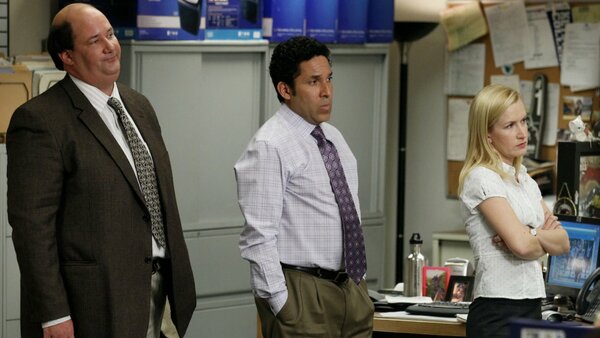
For this week I wanted to talk about one of the most daunting of issues that we as employees can face and that is change. Between initiatives from senior leaders, technology, and random issues that arise the business world is constantly evolving. But not every change is received with a warm welcome. The most common pushback is tied to employees resenting the fact that they are being told how to do business in a way that they have been doing for years. A classic example from The Office is where Stanley Hudson resents Ryan Howard (when he is in his new position at corporate) in how he is trying to change how the sales team does business. Requiring them to use technology like Blackberries is very reminiscent of how many employees view the adaptation of AI. While technologies might have their place in business, it often feels like leaders are jumping on the bandwagon simply because the tools are new and flashy. This does not inherently mean that they are better than what was being used up to that point. Another great example is when Sabre takes over and introduces their “sales-first” mentality resulting in employees from non-sales departments feeling like they are not receiving the necessary support in their own roles.
These examples do paint leadership as the villains in a sense and I think it is important to call out leaders who implement change for the sake of change. As leaders, you must be prepared to address the concerns of employees with the key question being why the change? If you cannot answer that question, perhaps your change is not being implemented for the right reasons. Ryan, for example, is great example of a new leader who is trying to make a name for himself and do something big and flashy. I do not recall him providing data to support why his push for new technology is the correct one, just that he is trying to bring some style and emulate other industries in which the employees are glued to their phones, even outside of work. Another example might be when Jim decided it would be beneficial to group all the birthdays for the month into one party. What he should have done was take the time to speak to employees to see how they felt about this change. He also could have made this change effective with the new calendar year or compiled data to show that the multiple parties disrupted productivity or were a drain financially. In reality, it seems to show he simply could not be bothered to order the cake and thought a last minute change was a good idea. Making changes, even small ones, should require research and explanation to support the rationale behind it. Instead, he wasted a whole day on that decision that could have been nixed with one conference room meeting.
Now there are two different types of change that occur in the workplace and they are often met with different levels of apprehension. We have adaptive change which are often seen as small, incremental changes and often occur has events dictate them. Transitioning to a new software could be seen as a method or perhaps your company is transitioning into a hybrid/remote model which would require new forms of communication be in place. We then have transformational change and this is seen as the larger changes which will often take extended periods of time to plan. Creating a new position/department could be seen as an example as it is a change that impacts the company as a whole rather than a small piece.
What is the reason?
First and foremost, why are you looking to bring in this change? Too often we hear about how the world is always changing for the sake of progress. But progress doesn’t inherently mean better as it could just as easily mean flashier, but not cost effective or productive. Before you begin implementing your change or looping people in, ask yourself if you are addressing a real problem that the current model does not support, or is this just a vanity project or even a whim because you read about AI in the newspaper and thought it sounded cool. Implementing a great idea might bring you respect, but costing a company a fortune on a colossal misstep will give you a reputation.
Research and Support
Perhaps the greatest tip that can be recommended to leaders implementing change, which I have spoken about above, is that you should not make quick decisions on the fly. Time should be spent reviewing your options and using your resources to research and be able to support it with data. Too often we see in film and television about leaders who simply follow their gut to make rapid fire decisions. While there is a place for trusting your instinct, you should still be able to thoroughly defend your decision with more than a simple “because I said so.” I am a firm believer that a leader implementing a change should be able to refute criticisms and concerns with their proposition with clear facts and explanations. If your idea cannot hold up to the smallest bit of scrutiny, it is likely not the ideal option to begin with.
Have a Plan
We all have those people in our lives who hate structure and prefer to have an adventure on a whim. That might be fine for whipping up a stew or exploring a city on vacation, but businesses require order and planning in all of their endeavors. If you were implementing a change at work, such as bringing in some new software, it would never be as simple as “put the disk in on Monday and there we are.” Even such a change that sounds simple should have a full plan to lay out all of the different steps. Using that above analogy, who is responsible for installing the software? Updates? As it been tested to ensure it works with your existing programming? Who is leading training seminars for staff? These are but a few of the many questions that can arise if you have no laid out a plan detailing the steps to seeing your change through 1.
Involve Stakeholders
If you are going in on a change alone, you are already doomed. It is not enough to simply assign steps to people, you should be working alongside colleagues so they work on the project together. If you are a senior leader of a company, you would definitely need people from Information Services to have a hand in determining changes to software. Using the adaptation of AI into the business world, I am willing to bet most of the leaders who have pushed their company to bring it in have no experience in the field. I am a firm believer that if you cannot be considered an expert in the field of the change you are leading, you need support from people who do understand it with the authority to make key decisions.
Even further, you should be speaking with the employees whom will be dealing with these changes. When I was a leader for Environmental Services and was tasked with redesigning the job plans of routines, I didn’t just sit down and make it up on the spot. I walked these routines with my staff who were the experts of what they do every single day. While I was able to bring up aspects that they admitted would make the routine easier, there were plenty of aspects to their jobs that were not thoroughly documented and could have been fully missed had we not mapped it out together. A true leader leads, and that often involves working with your staff alongside each other and utilizing their knowledge and skills.
Follow and Track
True change is not done just because you have implemented your project or initiative. You need to have measurable metrics that you can track to ensure that the change you likely just spent a great deal of time and money on is not a failure. Catching a issue with the launch early on by yourself is far more forgiving than being caught months later but dozens of employees. Before the change is even completed, you should know what sort of information you are gathering and reviewing so that you can begin monitoring the moment it is live.
Perhaps the greatest tool of all is simply communication. A company runs on the continued teamwork of everyone involved and I fear that leaders often forget that because they get it in their head that their title gives them the authority. While I am not saying employees should disrespect their leaders, but I am saying that it should be encouraged to provide honest feedback and criticisms when a costly blunder might be on the horizon.
What are some other good strategies for implementing change in the workplace to ensure the act of introducing the change can offer a smooth transition?
While you think of your own ideas, I hope you all are staying warm out there, you have a great weekend, and as always I’ll see you around the Breakroom.
- Stobierski, T. (2020, January 23). 5 Tips for Managing Change in the Workplace. Harvard Business School. Retrieved January 28, 2026, from https://online.hbs.edu/blog/post/managing-change-in-the-workplace ↩︎