Posted in Business Article, Coffee Break, Opinion

Could That Meeting Have Been an Email?

Good morning everyone and welcome back to the Breakroom!

Working in an office setting is interesting in many ways in that it has a unique blend of routine tasks that you just want a break from, and random issues that arise that you wish would just solve themselves. Mixed in there are something that occur in every office across the globe: meetings.

These meetings range greatly in length, occupancy, and topics with perhaps one commonality amongst them. Someone in attendance thinking “this could have been an email.”

This scenario is so common that I believe that statement is considered a cliché in the business world, especially given how true that statement really is. We have all been part of meetings that seem to drag on with the meeting leader going through information that we easily could have read from an email and see little point to a meeting having been necessary. There is always going to be one person in attendance who seems to not understand the topic at hand and has a thousand questions. Of course, the questions are usually inane and tend to start to deviate from the subject matter.

So, the question is, when do we know that a meeting could just be made into an email? Of course, I am sure plenty of people choose to hold meetings because it saves them from having to compile the information into an email or must field follow up questions that someone will inevitably have regarding it. I have researched recommendations from experts, as well as choosing to insert my own opinions on when a meeting is necessary over an email.

Compromise: Email with a short meeting
Before I get into breaking down when an email is better than a meeting, I want to first propose the option of doing both. I think it could be beneficial to issue an email (if deemed superior to needing a meeting) but then send out a short meeting where people could choose to attend if they had questions. The key would be to making this meeting shorter than it initially would have been, and then making it optional (if mandatory, there was no point to an email). Should anyone attend and there is discussion, notes should be taken and then sent out as another email to those originally on the email chain. This way it is not taking up as much time as a full meeting could have been and there is a chance that the meeting might not even be needed. But that is the big boon, to give employees the opportunity to determine if they need further clarification and a meeting is required.

Determine using EPIC
Shani Harmon contributed to Forbes in her own article on this subject with using EPIC collaborators to determine the validity of a meeting versus an email. These stand for Emotion, Purpose, Interpersonal, and Complexity. Emotion means a meeting is needed when the emotional tone of the email correspondence starts to rise. If people are connecting on the email chain and you sense people are starting to get heated in debate, it is time to quash any tension or confusion. Purpose refers to what the purpose of a meeting would be? If the sole purpose of the meeting is to inform people, this could certainly be accomplished with an email. But if the topic requires additional input or insight from people, then a meeting could be useful. Interpersonal means whether a meeting on the said topic could be seen as a means of strengthening bonds amongst those involved, then it might make sense to choose to host a meeting versus just leaving it as an email. This scenario could use my proposed compromise solution above. I have been to these types of meetings, and they very often devolve into conversation about children and to be perfectly honest the only people who enjoy hearing people talking about their kids are parents who are eager to brag about their own children. And complexity, if a topic might be easily misconstrued or is likely to have follow up questions, go forward with a formal meeting to discuss the topic.1

Is this just about your ego?
This certainly sounds like an attack on you, but I feel that some leaders need to hear this. I have been in meetings about certain leaders, often a Director or VP, who seem to love hearing themselves talk. The subject matter is nothing too complicated that cannot be sent in an email, and they have that protocol of “alert us in the chat if you have a question” so that tells me they are trying to control how many other people get to talk. The logic is certainly that they believe their time is more important and honestly it feels like they could not be bothered to compile an email. I mentioned this above, not wanting to write an email is not a good enough reason to host an mandatory meeting. Plus, most of these leaders have an assistant who they could dictate or have compiled a presentation that can be sent out. So, I just need to say, just because you are a senior leader does not mean we are excited that you offer time to listen to you speak. Unless there is a true level of complexity or brainstorming is needed, just write an email and send it out with the update.

Who would the recipients be?
We have been talking a lot about the data involved, but not about the people who would be involved with the meeting/email and that can be just as important. I could argue that if it is only going to two people then an email could suffice, although I could also say the same for a meeting. I feel it is valuable to evaluate the people to know if you have people who are the “talkers” who would prefer to have a meeting, or perhaps you have a series of “this could have been an email” types in which an email could likely suffice. When in doubt, a meeting is likely the option to go with, especially if you include people across multiple departments including those you do not oversee.

Can this be included elsewhere?
I feel too often people might end up scheduling many little meetings or emails when one could consolidate it all into one larger meeting. My own leader has an ongoing meeting each week which is designated for updates to save from sending over a thousand emails each week. And some of the time the meetings end up cancelled anyways because there was either no updates, they already came through as an email, or perhaps we discussed the details at a separate meeting. See this as an opportunity to streamline your own schedule rather than feeling forced to spend more of your own time than is needed.

At the end of the day, I feel the biggest tip is to simply take the time and ask yourself: is this better as a meeting or an email? I often wonder if people feel compelled to do meetings because that is how you get noticed and remembered. It is true, but I can assure you that all it takes is for you to schedule and run one meeting that goes on for over an hour with only 10 minutes worth of vital information and we will remember you as the person who wastes our time. If you truly feel the need to always hold meetings rather than emails, I will argue it is important to learn how to properly run a meeting. I shall cover that in a future post, so watch for that, but perfecting your meeting organization and public speaking would be priority one.

Have additional tips? Feel free to reach out and share in the comments to share with our readers and let us know what you think!

  1. Harmon, S. (2019, May 16). To Meet Or Email — That Is The Question. Forbes. Retrieved February 2, 2026, from https://www.forbes.com/sites/harmoncullinan/2019/05/16/to-meet-or-email-that-is-the-question/ ↩︎
Posted in Business Article, Coffee Break, Opinion

Introducing Change in the Workplace

Good morning everyone and welcome back to the Breakroom!

We are doing another blog after we have struggled with some scary instances regarding the health of our dog, Loki. He is doing great but we have not been able to get the time to put together a podcast.

Obviously our goal is to do both a blog and pod each week but as they say, when it rains it pours.

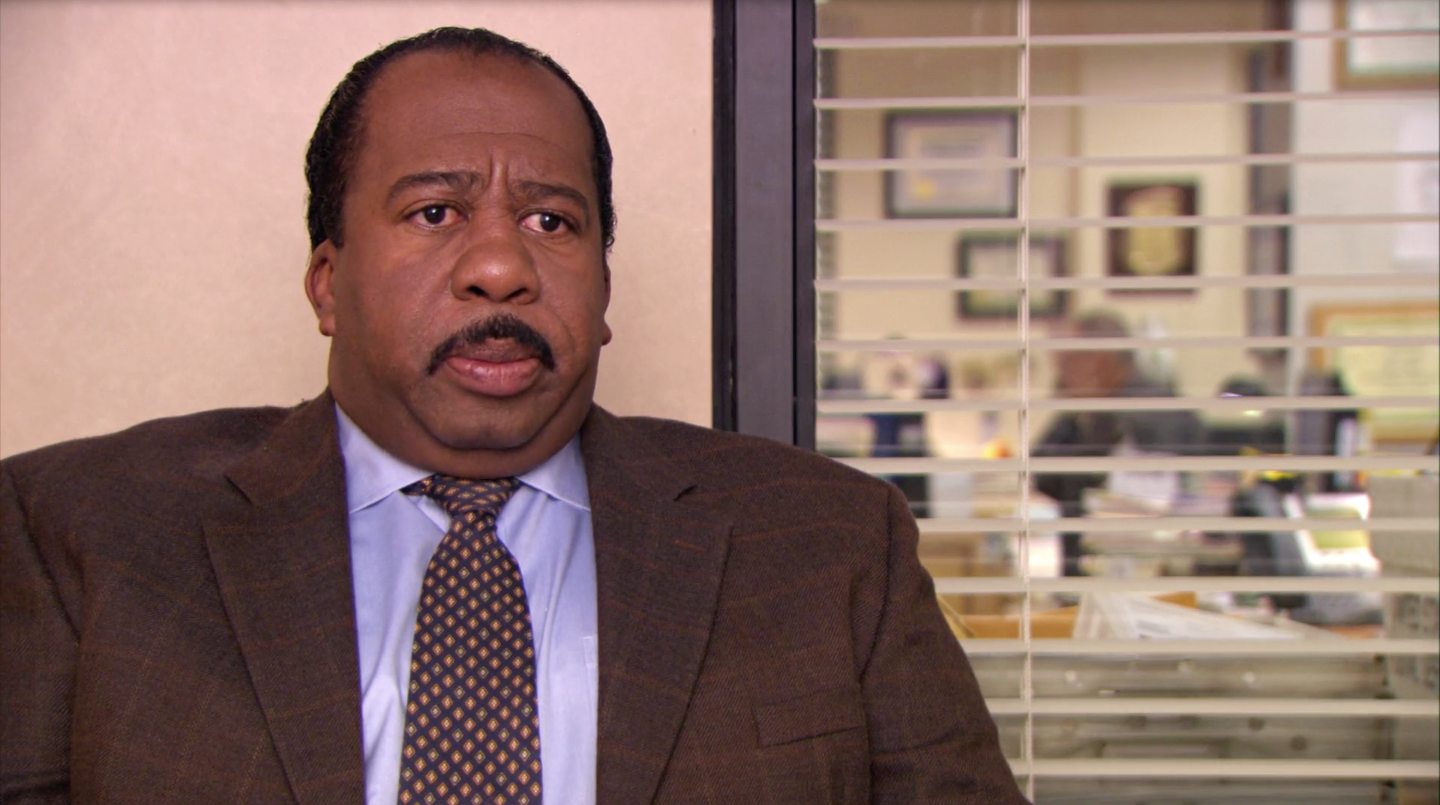
For this week I wanted to talk about one of the most daunting of issues that we as employees can face and that is change. Between initiatives from senior leaders, technology, and random issues that arise the business world is constantly evolving. But not every change is received with a warm welcome. The most common pushback is tied to employees resenting the fact that they are being told how to do business in a way that they have been doing for years. A classic example from The Office is where Stanley Hudson resents Ryan Howard (when he is in his new position at corporate) in how he is trying to change how the sales team does business. Requiring them to use technology like Blackberries is very reminiscent of how many employees view the adaptation of AI. While technologies might have their place in business, it often feels like leaders are jumping on the bandwagon simply because the tools are new and flashy. This does not inherently mean that they are better than what was being used up to that point. Another great example is when Sabre takes over and introduces their “sales-first” mentality resulting in employees from non-sales departments feeling like they are not receiving the necessary support in their own roles.

These examples do paint leadership as the villains in a sense and I think it is important to call out leaders who implement change for the sake of change. As leaders, you must be prepared to address the concerns of employees with the key question being why the change? If you cannot answer that question, perhaps your change is not being implemented for the right reasons. Ryan, for example, is great example of a new leader who is trying to make a name for himself and do something big and flashy. I do not recall him providing data to support why his push for new technology is the correct one, just that he is trying to bring some style and emulate other industries in which the employees are glued to their phones, even outside of work. Another example might be when Jim decided it would be beneficial to group all the birthdays for the month into one party. What he should have done was take the time to speak to employees to see how they felt about this change. He also could have made this change effective with the new calendar year or compiled data to show that the multiple parties disrupted productivity or were a drain financially. In reality, it seems to show he simply could not be bothered to order the cake and thought a last minute change was a good idea. Making changes, even small ones, should require research and explanation to support the rationale behind it. Instead, he wasted a whole day on that decision that could have been nixed with one conference room meeting.

Now there are two different types of change that occur in the workplace and they are often met with different levels of apprehension. We have adaptive change which are often seen as small, incremental changes and often occur has events dictate them. Transitioning to a new software could be seen as a method or perhaps your company is transitioning into a hybrid/remote model which would require new forms of communication be in place. We then have transformational change and this is seen as the larger changes which will often take extended periods of time to plan. Creating a new position/department could be seen as an example as it is a change that impacts the company as a whole rather than a small piece.

What is the reason?
First and foremost, why are you looking to bring in this change? Too often we hear about how the world is always changing for the sake of progress. But progress doesn’t inherently mean better as it could just as easily mean flashier, but not cost effective or productive. Before you begin implementing your change or looping people in, ask yourself if you are addressing a real problem that the current model does not support, or is this just a vanity project or even a whim because you read about AI in the newspaper and thought it sounded cool. Implementing a great idea might bring you respect, but costing a company a fortune on a colossal misstep will give you a reputation.

Research and Support
Perhaps the greatest tip that can be recommended to leaders implementing change, which I have spoken about above, is that you should not make quick decisions on the fly. Time should be spent reviewing your options and using your resources to research and be able to support it with data. Too often we see in film and television about leaders who simply follow their gut to make rapid fire decisions. While there is a place for trusting your instinct, you should still be able to thoroughly defend your decision with more than a simple “because I said so.” I am a firm believer that a leader implementing a change should be able to refute criticisms and concerns with their proposition with clear facts and explanations. If your idea cannot hold up to the smallest bit of scrutiny, it is likely not the ideal option to begin with.

Have a Plan
We all have those people in our lives who hate structure and prefer to have an adventure on a whim. That might be fine for whipping up a stew or exploring a city on vacation, but businesses require order and planning in all of their endeavors. If you were implementing a change at work, such as bringing in some new software, it would never be as simple as “put the disk in on Monday and there we are.” Even such a change that sounds simple should have a full plan to lay out all of the different steps. Using that above analogy, who is responsible for installing the software? Updates? As it been tested to ensure it works with your existing programming? Who is leading training seminars for staff? These are but a few of the many questions that can arise if you have no laid out a plan detailing the steps to seeing your change through 1.

Involve Stakeholders
If you are going in on a change alone, you are already doomed. It is not enough to simply assign steps to people, you should be working alongside colleagues so they work on the project together. If you are a senior leader of a company, you would definitely need people from Information Services to have a hand in determining changes to software. Using the adaptation of AI into the business world, I am willing to bet most of the leaders who have pushed their company to bring it in have no experience in the field. I am a firm believer that if you cannot be considered an expert in the field of the change you are leading, you need support from people who do understand it with the authority to make key decisions.

Even further, you should be speaking with the employees whom will be dealing with these changes. When I was a leader for Environmental Services and was tasked with redesigning the job plans of routines, I didn’t just sit down and make it up on the spot. I walked these routines with my staff who were the experts of what they do every single day. While I was able to bring up aspects that they admitted would make the routine easier, there were plenty of aspects to their jobs that were not thoroughly documented and could have been fully missed had we not mapped it out together. A true leader leads, and that often involves working with your staff alongside each other and utilizing their knowledge and skills.

Follow and Track
True change is not done just because you have implemented your project or initiative. You need to have measurable metrics that you can track to ensure that the change you likely just spent a great deal of time and money on is not a failure. Catching a issue with the launch early on by yourself is far more forgiving than being caught months later but dozens of employees. Before the change is even completed, you should know what sort of information you are gathering and reviewing so that you can begin monitoring the moment it is live.

Perhaps the greatest tool of all is simply communication. A company runs on the continued teamwork of everyone involved and I fear that leaders often forget that because they get it in their head that their title gives them the authority. While I am not saying employees should disrespect their leaders, but I am saying that it should be encouraged to provide honest feedback and criticisms when a costly blunder might be on the horizon.

What are some other good strategies for implementing change in the workplace to ensure the act of introducing the change can offer a smooth transition?

While you think of your own ideas, I hope you all are staying warm out there, you have a great weekend, and as always I’ll see you around the Breakroom.


  1. Stobierski, T. (2020, January 23). 5 Tips for Managing Change in the Workplace. Harvard Business School. Retrieved January 28, 2026, from https://online.hbs.edu/blog/post/managing-change-in-the-workplace ↩︎
Posted in Business Article, Coffee Break, Opinion

Woke or Just Sans Serif? Is Your Font a DEI Hire?

Good morning everyone and welcome back to Breakroom Breakdown! Now, there is a topic I have been wanting to discuss for a very long time and that is how to decide what font to use in your documents, emails, etc… I’ve been waiting for inspiration to strike me, but never in a million years could I have predicted it coming up due to a font being considered “too woke.1

You read that right, the break news from the United States State Department is that their current font being used (Calibri) was started during the Biden Administration for “woke reasons” and they will be reverting to the previously used Times New Roman. For the record, Times New Roman was the primary font used from 2004 until 2023, which is likely also why this was the favorite required by most high school teachers. It was in 2023 that the decision was made to switch to Calibri, which has been the fault in Microsoft tools since 2007. The reason for the switch? Wokeness at its worse. The decision was to shift to a sans serif font to make it easier to read, in particular by those with impaired vision or reading disabilities like dyslexia. It is for those reason that the Americans with Disability Act requires the use of sans serif fonts on signs and similar postings. So we can thank Marco Rubio for making this decision to help squash out the silly woke notion of making it easier for people to read.

To help clear up the terminology for those who are unaware of the anatomy of font (which is fascinating, by the way) sans serifs simply means “no serifs.” Serif is defined as the small lines and flourishes on certain fonts as a means of guiding eyes while reading it. In particular, serif fonts (Times New Roman, Garamond) are ideal for use in print such as news papers and books. While they tend to work well there, on a screen they can blend together and make it more difficult to read. In particular for those with certain disabilities, which is why they opt for fonts known as sans serif (Calibri, Helvetica). If you have not noticed, I have opted to switch to a sans serif font (known as “Open Sans” here in WordPress). Is it different? Yes. Is it that big of a deal if by doing this I have now made it easier for people? Call me woke, but heck no.

If you view below, you can see a side-by-side comparison of the fonts in question being used at the State Department (courtesy of NPR)2:

Comparison of the fonts Calibri and Times New Roman, with dates indicating the years 2023 and 2025. Calibri appears on the left side for 2023, and Times New Roman on the right side for 2025.
Source: NPR

While I realistically can see they are different, the truth is at the end of the day I do not see them as so different that it truly matters. I must argue that Marco “Little Marco” Rubio is not truly accomplishing anything aside from continuing his assault on anything that can be considered “DEI.” But even this should be considered scraping the bottom of the barrel in an attempt to go against a font that he does not like, especially as I refuse to believe he types up any document himself. But it did bring up a good topic of how, what fonts are good choices to use in a professional capacity? Maybe we can help Little Marco come up with a suitable replacement instead of Times New Roman (which is tad bourgeois in my opinion).

Reviewing a few different sources, I keep running into the same details so evidently this is has been long thought out. First, it is evidently not uncommon to use two different fonts in certain forms of writing. It is often that you might use a decorative font for headers and then a simpler one for the body with Times New Roman and Arial being a pretty common example. It is also worth nothing that in addition to your font, you will also want to consider your primary size (the State Department was 14 to go along with their Times New Roman) and this is because the readability of efficiency of a font can be heavily impacted based on the size being used. As we will all remember from school, Size 12 was our go-to for documents but we are certainly free to up it a little bit.

Further, the type of font really should be impacted based on what it is being used for. Serif fonts like Times New Roman or Georgia are great for being printed out and read. But it is common for them to be a strain on your eyes for long reading on screens, in which case sans serifs should be considered3.

Besides readability, we also have other considerations often associated with certain fonts. Our serifs are so popular because they offer an older feel, as they are meant to be reminiscent of a type writer and so they have distinguished feel. Sans serifs, however, are designed to give us a cleaner and more modern feel. Interestingly, despite meant to feel modern they are also meant to also look more like handwritten script since most people do not have serifs on their handwriting4.

At the end of the day, the font you choose has a lot to do with the specific branding you want your choice to relay (you might not want to choose Wingdings) but it also has to do with how the font is being used. In Rubio’s case, he is changing the font used in the correspondence used by the State Department. Given that this is going to include both print and digital, it does make sense to try to stick to one font between both. And given that I will wager the majority of the correspondence will be digital, I would argue that a screen-friendly sans serif would make the most sense and that his argument about the font being “woke” simply does not hold water. As multiple sites have confirmed, a sans serif like Calibri is the preferred method for screens to the point that Microsoft fully switched over to it almost two decades ago.

As a friendly reminder to my readers who might be unaware, to be woke is actually a compliment. It refers to someone being mindful and knowledgeable of certain injustices and making the conscious decision to not ignore it. So I am going formally recommend to all of my readers, lets go woke and push for the use of sans serif fonts in the future. We might not be able to end the social injustice in this country, but we can certainly scare them off when they see the terrifying lack of serifs on our typography.

Please give us a shoutout if you have been inspired to go woke and limit your serif use online. Further, I have been very inspired to learn more about fonts and would love to hear from typography nerds out there. Drop some cool fonts and facts for us all to read going into this weekend.

As always, I’ll see you round the Breakroom.

  1. Lee, M. (2025, December 11). Calibri font becomes the latest DEI target as Rubio orders return to Times New Roman. AP News. Retrieved December 11, 2025, from https://apnews.com/article/rubio-state-department-fonts-calibri-times-new-roman-1fcdc92f8229efd515fe44ae9ca16137 ↩︎
  2. Treisman, R. (2025, December 11). The State Department reinstates an old font, in a typeface about-face. NPR. Retrieved December 11, 2025, from https://www.npr.org/2025/12/11/nx-s1-5640715/state-department-font-times-new-roman-calibri ↩︎
  3. (2024, December 19). Best Professional Email Font: Ultimate Guide. Publicate. Retrieved December 11, 2025, from https://publicate.it/blog/professional-email-font ↩︎
  4. (2024, August 27). Different Types of Fonts And How to Choose One. Microsoft. Retrieved December 11, 2025, from https://www.microsoft.com/en-us/microsoft-365-life-hacks/presentations/different-types-of-fonts-and-how-to-choose-one ↩︎

Good morning everyone, and welcome back to the Breakroom. This week I want to talk about a topic that I have touched upon in the past but have been wanting to devote a piece to for awhile: quiet quitting. When this phrase first came to light, I thought I was going to miss my opportunity in being able to talk about it while it was still fresh. But we are around 3 years in and still this topic continues to come up so let us view if the world still continues to see this as an issue?

What is quiet quitting?

For those unfamiliar with the phrase, you might be thinking it means someone basically just silently quits their job. In reality, quiet quitting is defined as doing the minimum job requirements for your job. Some examples might be not working overtime shifts, only answering emails during work hours, not seeking extra tasks or projects not assigned to them, not attending meetings not mandatory, and not coming in early or staying late1. This phrasing became famous in 2022 when Gen Z employees began posting videos and content on TikTok talking about how they are doing the minimum required of them.

So this is not to say the work is not being completed, simply that employees are doing their assigned tasks in line with their job. You might be wondering where the concern arises from this. The primary belief is that this shows an employee is discontent with their job or company, no longer inspired or motivated to be overachievers at work. The belief is also that when people begin to quiet quit, they will inevitably fully quit or become so lax that they are fired. An article from Gallup chose to argue that quiet quitting is just the beginning because eventually employees begin doing less than their minimum work because every job requires a certain degree of extra work such as collaborating with colleagues or meeting customer needs2.

While many of us thought this might be a silly internet slang that would disappear, it seems to have some pretty strong staying power as it makes the knees of senior leaders quiver.

One of the key reasons leaders and organizations see this as an issue is they feel employees should be ready to prove themselves at work and continue to go above and beyond. As this practice goes on, they can see certain employees not engaging with their colleagues as often or being absent from unnecessary meetings or information events. There is then the concern that this could lead to poor attendance or quitting last minute, thereby causing strain on the remaining staff. Even if they do not quit, management has reservations about continuing to employ and pay someone not doing more than what is expected of them3.

Why do people quiet quit?

Unlike many of the articles I have reviewed, Paychex did go into detail on some of the primary reasons that people choose to become quiet quitters. Their list consists of:

-Lack of recognition
-Frustrations over compensation
-Poor work-life balance
-Lack of growth opportunities
-Toxic work culture

As you can see, many of these issues fall on the employee not having confidence in the future of their career with this company. There is that expression that no one notices when you do your job well but they notice the moment you make a mistake. Perhaps nothing has become more important to quiet quitters than work-life balance. Rather than wanting to work 50 to 60 hours a week, many employees would rather devote that time to family or personal hobbies.

Where Paychex starts to deviate from their informative prowess is their suggestions on how to address possible quiet quitters. Some of their recommendation include making it easier to establish a work-life balance and pay them a fair compensation. The former is what the employee is already doing, and the latter is something your company should already be doing.4

Opinion: Is quiet quitting an issue?

Now I have read a few articles in preparation for this, and I have seen dozens of others over the years and I believe I have come to a conclusion. This is nothing more than the McCarthys of the business world panicking over the fact that employees do not want to break themselves at work when they are seeing no true benefit. As the title of this blog post suggests, quiet quitting is no more a threat to the American way of life is than Communism is.

Every article confirms that quiet quitting is doing the minimum required of your job. That is not being bad at your job, that is literally doing your job. Some of the articles claim that quiet quitters have increased absenteeism, are making more mistakes, and simply are not doing their job to a proper quality. That is not considered quiet quitting, that is simply not doing their job and these two should not be equated to each other.

The purpose behind quiet quitting is still establish clear boundaries between work and life, something that we find baffling in the United States but is the norm everywhere else. The moment I clock out for the day, that is it. I am no longer being paid and work is not even on my radar. I will not do work tasks in the evening, weekend, or on vacation because I am no longer working. It is very easy for corporate executive who makes six or seven figures to criticize those barely making more than minimum wage for wanting to focus on their personal life rather than work. Some people enjoy centering their lives around work, but many people do not and that is okay. We should be encouraged to use our paid time away, spend time with family and friends, or just plain staying in and playing video games.

What about not wanting to go to a happy hour with coworkers after work or get together for a morning huddle to gab about things going on? For many of us, our coworkers truly are coworkers and are not people we would normally socialize with outside of work. So rather than having to spend 10 minutes listening to Susan show pictures of her grandchild, you are allowed to just skip it. And to those leaders out there, this does not mean they are an uninvested employee or someone who is not a team player. They simply want to be colleagues and if you try to say “but I think of us as a family” then that is a red flag and you need to evaluate if you are actually the problem.

So I will not accept anyone trying to explain that quiet quitting is a problem, because it is not. Not every employee should be expected to prioritize work over their personal lives because for many, work is simply a means of affording their hobbies and passions. But I will say, I know plenty of people who might change their tune if they were suddenly being paid that same wage that senior leaders see, so perhaps Paychex does have a point in offering people more money.

If I am being fully honest with everyone, part of me is convinced that promoting the “epidemic” of quiet quitting is simply gaslighting on major scale. We have leaders, executives, and business experts all overpaid and have likely not worked a real job in decades telling us that doing standard requirements of jobs are not good enough. That you are not a good employee unless you work overtime, come in early and stay late, work off the clock, and prioritize work over everything else in your life. You read these articles from experts and I truly felt gaslit into believing I was living in a parallel world and I was the crazy one.

Quiet quitting is not a threat to the American workplace and frankly I am going further to say it is not even real. It is quiet literally just doing one’s job.

  1. Klotz, A. C., & Bolino, M. C. (2022, September 15). When Quiet Quitting Is Worse Than the Real Thing. Harvard Business Review. Retrieved November 13, 2025, from https://hbr.org/2022/09/when-quiet-quitting-is-worse-than-the-real-thing ↩︎
  2. Harter, J. (2022, September 6). Is Quiet Quitting Real? Gallup. Retrieved November 13, 2025, from https://www.gallup.com/workplace/398306/quiet-quitting-real.aspx ↩︎
  3. Masterson, V. (2022, September 2). What is quiet quitting and why is it happening. World Economic Forum. Retrieved November 13, 2025, from https://www.weforum.org/stories/2022/09/quiet-quitting-explained/#:~:text=Quiet%20quitting%20is%20the%20art,Xer%2C%20reports%20the%20LA%20Times. ↩︎
  4. Whitney, H. (2024, May 14). Quiet Quitting: Meaning, Signs, and How To Prevent It. Paychex. Retrieved November 13, 2025, from https://www.paychex.com/articles/human-resources/quiet-quitting ↩︎

Quiet Quitting: The Corporate Red Scare

Posted in Coffee Break, Finer Things Club, The Office

Souvenirs of Perspective

Good morning everyone, and welcome back to the breakroom! I do apologize about not getting a post out last week, we spent the last two weeks in France and optimistic me thought I’d find the time to put together a post last week. I ended up finding myself very busy and wasn’t able to get anything together, but did want to put together a special post for my return. Rather than a Breakdown of an office episode, I instead wanted to talk about some of things I’ve brought back with me from my trip.

This is not specifically about physical objects, but rather focusing on the many ideas I had while there on how I want to do things differently when I return. I know we all have those moments when we are on an amazing trip and think about what we want to do when we return. This could be inspiration to take up a hobby, doing afternoon tea every day, maybe an idea on a new tattoo. Too often we lose momentum and let those ideas be cast away as youthful optimisms. Well, I would like to not let that be the case and to help with that I want to talk about some of the specific inspirations I want to cement in my life.

Shelves filled with jars of 'Baba' desserts, labeled with prices and flavors, showcasing various sizes and types.

Food Inspirations
One of my favorite things about going to France is experiencing the food; they truly do have some of the best foods in the world. As someone who loves to cook, I really wanted to bring some culinary inspiration back with me so I could recreate some of it. One of my favorites was going into a sweets shop and getting to try some dangerously boozy rum babas in adorable jars. Rather than trying to figure out how to bring them over to the states, I really want to try to recreate them as a fun Christmas gift. My other big one, which will be trickier, is mastering the art of the French baguette. In theory it is simple but definitely requires proper French flour as the gluten content is much different than here and the states and those with gluten intolerance can actually eat it. Unfortunately, with the current tariffs in place this will likely be tricky. But certainly the culinary highlight was being able to take part in a 5-6 course meal at a 5 star restaurant in southern France. From the drinks to the meal to the dessert, it was potentially one of the greatest meals of my life.

A table set with a cup of coffee and a croissant on a plate, showcasing a cozy café ambiance.

Simple Moments
Rather than do major touristy things in Paris, we mainly just walked around and visited the zoos and aquarium again. Of course, the first thing we did was grab some coffee and a fresh croissant. I think we often put a lot of pressure on ourselves to do big activities when some of the most memorable can be sipping on coffee, enjoying a pastry, and taking in the atmosphere. That being said, I know my husband would say I need to learn to be more “lax” and “go with the flow.” I did struggle in France because I prefer to always have a plan or itinerary and I can sort of fall apart trying to plan on the fly with no clear direction.

A dramatic painting depicting a fiery landscape with a looming historical building in the background, framed in an ornate golden frame.

Artistic Inspiration
I always find myself inspired when I see unique pieces of art (this photo is actually from a previous trip but I found myself looking at my old photos). I feel the emotions and thoughts that went into the art and I feel compelled to try to do the same. While I am not skilled in painting or photography, I do considered myself versed in writing. And I will admit that I have been wanting to actually write more than my blog articles. I have thought about a collection of short stories, trying my hand at playwriting, and I’ve even had a couple book ideas. Besides losing the motivation you get while abroad, the moment you try to make something real you have to admit you care about the project. And that is when you face the fact that you can fail and you have to ask yourself if you are okay with that. Of course, there has certainly been a part of me that wishes I had that special touch and could learn to paint, do photography, draw (one of my book ideas could be a cool graphic novel). But the realist in me knows that not everyone can be good at everything so we learn where our unique skills lie.

A picturesque vineyard with rows of grapevines under a bright blue sky and fluffy white clouds.

Professional Aspirations
More than anything, I did get inspired about being more serious about that next step in my career. I have been too passive the last four years and evidently I need to be much more aggressive and willing to step out of my comfort zone to get the job and salary that I have been working towards and deserve. I need be more thoughtful with where I am applying for, and if I can actually line up an interview I ought to have the confidence to go in and stop playing by the rules. It is easy to try to answer their questions in the way you believe they want to be heard but perhaps we need to have a bit more of our personality come out. It is easy to find a “yes man” but it is individuals who are hard to come by these days. It is interesting the sorts of things that inspire you, but it was seeing so many polished professionals in Paris that made me realize that I do miss that. As much as I love being at home with my puppies, part of me does miss getting to get dressed up and take some pride and confidence in going to work.

I know it is very easy to say you will do something, but it completely different to actually put that into practice. One of my common themes here is to encourage and hype my reader(s) because I firmly believe we need this encouragement. Of course, people like me are always so encouraging because we are also partially trying to motivate ourselves. As Jan Levinson once told Pam, there are always a thousand reasons not to do something. And as Jim later told Pam in that same episode, you have to take a chance on something sometime.

So this is me saying I’m choosing to not let the thousand things keep me from trying to accomplish something meaningful and I am going to design the next steps in my goals. I’m currently in the process of getting a large amount of job applications out to various locations, this being my big project over the weekend. My next goal is continue with this blog and podcast to make that into something meaningful. And I am going to evaluate what the next steps in my writing will be whether I take up writing articles/essays, stories, plays, or experimenting with it all.

For further inspiration, what sort of goals have you received from trips? I think we should make it more commonplace that we come back from trips not just relaxed, but changed for the better. To paraphrase Gandalf the Grey, if you get the opportunity to travel abroad you should expect to not return the same as you were. This should be encouraged because if you return unchanged, did you really learn anything about yourself or the world?

I wish you all an amazing weekend, and I hope you will share some of your own stories from traveling. Until next week, I’ll see you around the Breakroom.