Posted in Business Article, Coffee Break, Opinion

Could That Meeting Have Been an Email?

Good morning everyone and welcome back to the Breakroom!

Working in an office setting is interesting in many ways in that it has a unique blend of routine tasks that you just want a break from, and random issues that arise that you wish would just solve themselves. Mixed in there are something that occur in every office across the globe: meetings.

These meetings range greatly in length, occupancy, and topics with perhaps one commonality amongst them. Someone in attendance thinking “this could have been an email.”

This scenario is so common that I believe that statement is considered a cliché in the business world, especially given how true that statement really is. We have all been part of meetings that seem to drag on with the meeting leader going through information that we easily could have read from an email and see little point to a meeting having been necessary. There is always going to be one person in attendance who seems to not understand the topic at hand and has a thousand questions. Of course, the questions are usually inane and tend to start to deviate from the subject matter.

So, the question is, when do we know that a meeting could just be made into an email? Of course, I am sure plenty of people choose to hold meetings because it saves them from having to compile the information into an email or must field follow up questions that someone will inevitably have regarding it. I have researched recommendations from experts, as well as choosing to insert my own opinions on when a meeting is necessary over an email.

Compromise: Email with a short meeting
Before I get into breaking down when an email is better than a meeting, I want to first propose the option of doing both. I think it could be beneficial to issue an email (if deemed superior to needing a meeting) but then send out a short meeting where people could choose to attend if they had questions. The key would be to making this meeting shorter than it initially would have been, and then making it optional (if mandatory, there was no point to an email). Should anyone attend and there is discussion, notes should be taken and then sent out as another email to those originally on the email chain. This way it is not taking up as much time as a full meeting could have been and there is a chance that the meeting might not even be needed. But that is the big boon, to give employees the opportunity to determine if they need further clarification and a meeting is required.

Determine using EPIC
Shani Harmon contributed to Forbes in her own article on this subject with using EPIC collaborators to determine the validity of a meeting versus an email. These stand for Emotion, Purpose, Interpersonal, and Complexity. Emotion means a meeting is needed when the emotional tone of the email correspondence starts to rise. If people are connecting on the email chain and you sense people are starting to get heated in debate, it is time to quash any tension or confusion. Purpose refers to what the purpose of a meeting would be? If the sole purpose of the meeting is to inform people, this could certainly be accomplished with an email. But if the topic requires additional input or insight from people, then a meeting could be useful. Interpersonal means whether a meeting on the said topic could be seen as a means of strengthening bonds amongst those involved, then it might make sense to choose to host a meeting versus just leaving it as an email. This scenario could use my proposed compromise solution above. I have been to these types of meetings, and they very often devolve into conversation about children and to be perfectly honest the only people who enjoy hearing people talking about their kids are parents who are eager to brag about their own children. And complexity, if a topic might be easily misconstrued or is likely to have follow up questions, go forward with a formal meeting to discuss the topic.1

Is this just about your ego?
This certainly sounds like an attack on you, but I feel that some leaders need to hear this. I have been in meetings about certain leaders, often a Director or VP, who seem to love hearing themselves talk. The subject matter is nothing too complicated that cannot be sent in an email, and they have that protocol of “alert us in the chat if you have a question” so that tells me they are trying to control how many other people get to talk. The logic is certainly that they believe their time is more important and honestly it feels like they could not be bothered to compile an email. I mentioned this above, not wanting to write an email is not a good enough reason to host an mandatory meeting. Plus, most of these leaders have an assistant who they could dictate or have compiled a presentation that can be sent out. So, I just need to say, just because you are a senior leader does not mean we are excited that you offer time to listen to you speak. Unless there is a true level of complexity or brainstorming is needed, just write an email and send it out with the update.

Who would the recipients be?
We have been talking a lot about the data involved, but not about the people who would be involved with the meeting/email and that can be just as important. I could argue that if it is only going to two people then an email could suffice, although I could also say the same for a meeting. I feel it is valuable to evaluate the people to know if you have people who are the “talkers” who would prefer to have a meeting, or perhaps you have a series of “this could have been an email” types in which an email could likely suffice. When in doubt, a meeting is likely the option to go with, especially if you include people across multiple departments including those you do not oversee.

Can this be included elsewhere?
I feel too often people might end up scheduling many little meetings or emails when one could consolidate it all into one larger meeting. My own leader has an ongoing meeting each week which is designated for updates to save from sending over a thousand emails each week. And some of the time the meetings end up cancelled anyways because there was either no updates, they already came through as an email, or perhaps we discussed the details at a separate meeting. See this as an opportunity to streamline your own schedule rather than feeling forced to spend more of your own time than is needed.

At the end of the day, I feel the biggest tip is to simply take the time and ask yourself: is this better as a meeting or an email? I often wonder if people feel compelled to do meetings because that is how you get noticed and remembered. It is true, but I can assure you that all it takes is for you to schedule and run one meeting that goes on for over an hour with only 10 minutes worth of vital information and we will remember you as the person who wastes our time. If you truly feel the need to always hold meetings rather than emails, I will argue it is important to learn how to properly run a meeting. I shall cover that in a future post, so watch for that, but perfecting your meeting organization and public speaking would be priority one.

Have additional tips? Feel free to reach out and share in the comments to share with our readers and let us know what you think!

  1. Harmon, S. (2019, May 16). To Meet Or Email — That Is The Question. Forbes. Retrieved February 2, 2026, from https://www.forbes.com/sites/harmoncullinan/2019/05/16/to-meet-or-email-that-is-the-question/ ↩︎
Posted in Business Article, Coffee Break, Opinion

Introducing Change in the Workplace

Good morning everyone and welcome back to the Breakroom!

We are doing another blog after we have struggled with some scary instances regarding the health of our dog, Loki. He is doing great but we have not been able to get the time to put together a podcast.

Obviously our goal is to do both a blog and pod each week but as they say, when it rains it pours.

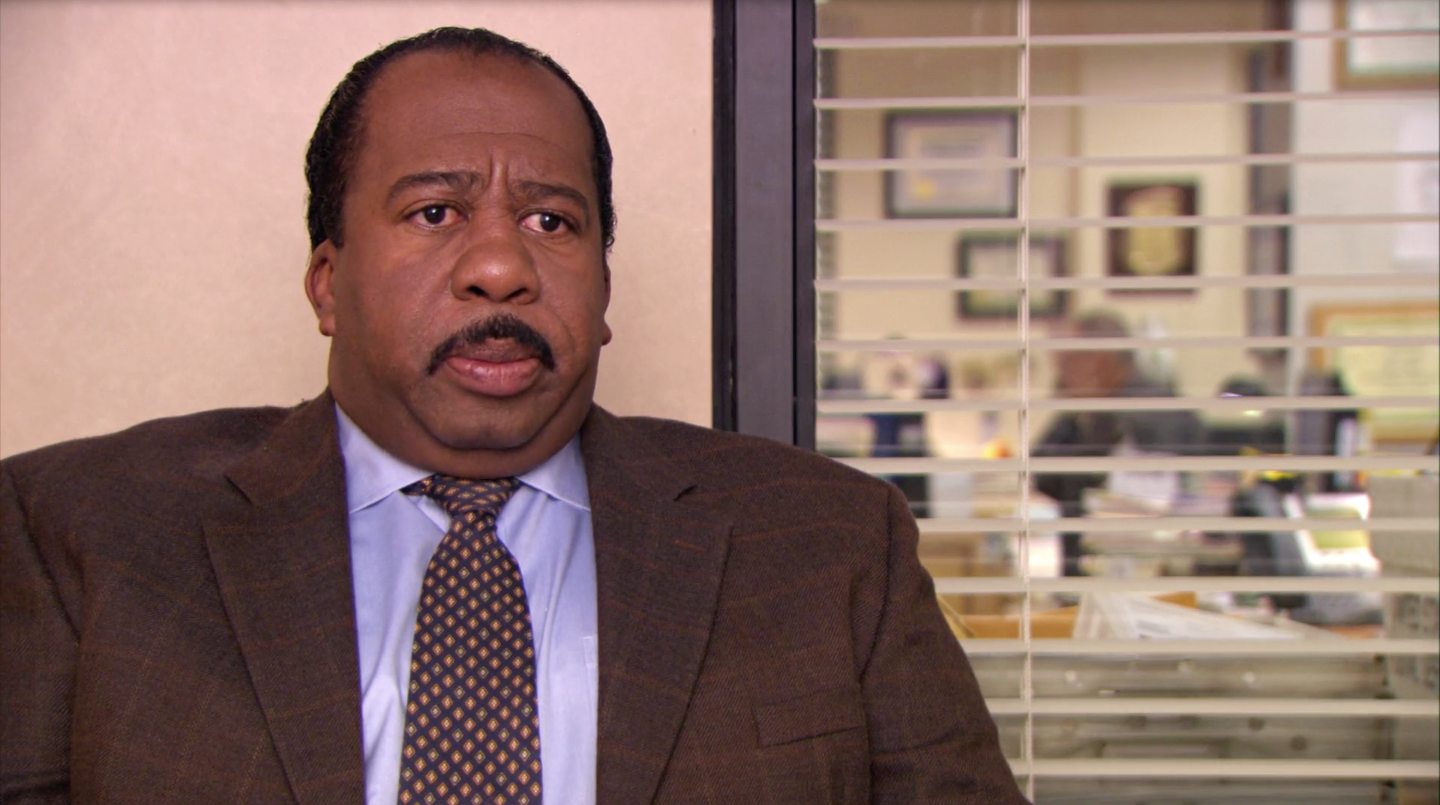
For this week I wanted to talk about one of the most daunting of issues that we as employees can face and that is change. Between initiatives from senior leaders, technology, and random issues that arise the business world is constantly evolving. But not every change is received with a warm welcome. The most common pushback is tied to employees resenting the fact that they are being told how to do business in a way that they have been doing for years. A classic example from The Office is where Stanley Hudson resents Ryan Howard (when he is in his new position at corporate) in how he is trying to change how the sales team does business. Requiring them to use technology like Blackberries is very reminiscent of how many employees view the adaptation of AI. While technologies might have their place in business, it often feels like leaders are jumping on the bandwagon simply because the tools are new and flashy. This does not inherently mean that they are better than what was being used up to that point. Another great example is when Sabre takes over and introduces their “sales-first” mentality resulting in employees from non-sales departments feeling like they are not receiving the necessary support in their own roles.

These examples do paint leadership as the villains in a sense and I think it is important to call out leaders who implement change for the sake of change. As leaders, you must be prepared to address the concerns of employees with the key question being why the change? If you cannot answer that question, perhaps your change is not being implemented for the right reasons. Ryan, for example, is great example of a new leader who is trying to make a name for himself and do something big and flashy. I do not recall him providing data to support why his push for new technology is the correct one, just that he is trying to bring some style and emulate other industries in which the employees are glued to their phones, even outside of work. Another example might be when Jim decided it would be beneficial to group all the birthdays for the month into one party. What he should have done was take the time to speak to employees to see how they felt about this change. He also could have made this change effective with the new calendar year or compiled data to show that the multiple parties disrupted productivity or were a drain financially. In reality, it seems to show he simply could not be bothered to order the cake and thought a last minute change was a good idea. Making changes, even small ones, should require research and explanation to support the rationale behind it. Instead, he wasted a whole day on that decision that could have been nixed with one conference room meeting.

Now there are two different types of change that occur in the workplace and they are often met with different levels of apprehension. We have adaptive change which are often seen as small, incremental changes and often occur has events dictate them. Transitioning to a new software could be seen as a method or perhaps your company is transitioning into a hybrid/remote model which would require new forms of communication be in place. We then have transformational change and this is seen as the larger changes which will often take extended periods of time to plan. Creating a new position/department could be seen as an example as it is a change that impacts the company as a whole rather than a small piece.

What is the reason?
First and foremost, why are you looking to bring in this change? Too often we hear about how the world is always changing for the sake of progress. But progress doesn’t inherently mean better as it could just as easily mean flashier, but not cost effective or productive. Before you begin implementing your change or looping people in, ask yourself if you are addressing a real problem that the current model does not support, or is this just a vanity project or even a whim because you read about AI in the newspaper and thought it sounded cool. Implementing a great idea might bring you respect, but costing a company a fortune on a colossal misstep will give you a reputation.

Research and Support
Perhaps the greatest tip that can be recommended to leaders implementing change, which I have spoken about above, is that you should not make quick decisions on the fly. Time should be spent reviewing your options and using your resources to research and be able to support it with data. Too often we see in film and television about leaders who simply follow their gut to make rapid fire decisions. While there is a place for trusting your instinct, you should still be able to thoroughly defend your decision with more than a simple “because I said so.” I am a firm believer that a leader implementing a change should be able to refute criticisms and concerns with their proposition with clear facts and explanations. If your idea cannot hold up to the smallest bit of scrutiny, it is likely not the ideal option to begin with.

Have a Plan
We all have those people in our lives who hate structure and prefer to have an adventure on a whim. That might be fine for whipping up a stew or exploring a city on vacation, but businesses require order and planning in all of their endeavors. If you were implementing a change at work, such as bringing in some new software, it would never be as simple as “put the disk in on Monday and there we are.” Even such a change that sounds simple should have a full plan to lay out all of the different steps. Using that above analogy, who is responsible for installing the software? Updates? As it been tested to ensure it works with your existing programming? Who is leading training seminars for staff? These are but a few of the many questions that can arise if you have no laid out a plan detailing the steps to seeing your change through 1.

Involve Stakeholders
If you are going in on a change alone, you are already doomed. It is not enough to simply assign steps to people, you should be working alongside colleagues so they work on the project together. If you are a senior leader of a company, you would definitely need people from Information Services to have a hand in determining changes to software. Using the adaptation of AI into the business world, I am willing to bet most of the leaders who have pushed their company to bring it in have no experience in the field. I am a firm believer that if you cannot be considered an expert in the field of the change you are leading, you need support from people who do understand it with the authority to make key decisions.

Even further, you should be speaking with the employees whom will be dealing with these changes. When I was a leader for Environmental Services and was tasked with redesigning the job plans of routines, I didn’t just sit down and make it up on the spot. I walked these routines with my staff who were the experts of what they do every single day. While I was able to bring up aspects that they admitted would make the routine easier, there were plenty of aspects to their jobs that were not thoroughly documented and could have been fully missed had we not mapped it out together. A true leader leads, and that often involves working with your staff alongside each other and utilizing their knowledge and skills.

Follow and Track
True change is not done just because you have implemented your project or initiative. You need to have measurable metrics that you can track to ensure that the change you likely just spent a great deal of time and money on is not a failure. Catching a issue with the launch early on by yourself is far more forgiving than being caught months later but dozens of employees. Before the change is even completed, you should know what sort of information you are gathering and reviewing so that you can begin monitoring the moment it is live.

Perhaps the greatest tool of all is simply communication. A company runs on the continued teamwork of everyone involved and I fear that leaders often forget that because they get it in their head that their title gives them the authority. While I am not saying employees should disrespect their leaders, but I am saying that it should be encouraged to provide honest feedback and criticisms when a costly blunder might be on the horizon.

What are some other good strategies for implementing change in the workplace to ensure the act of introducing the change can offer a smooth transition?

While you think of your own ideas, I hope you all are staying warm out there, you have a great weekend, and as always I’ll see you around the Breakroom.


  1. Stobierski, T. (2020, January 23). 5 Tips for Managing Change in the Workplace. Harvard Business School. Retrieved January 28, 2026, from https://online.hbs.edu/blog/post/managing-change-in-the-workplace ↩︎
Posted in Business Article, Opinion, Party Planning Committee, The Office

New Year’s Resolutions for 2026

Good morning everyone, welcome back to the Breakroom and our first post for 2026. While this might be pretty unoriginal, I wanted to use this chance to talk about New Year’s Resolutions. Historically many people fail to keep them, but I still find that they are important because it gives us a goal to strive for. I recall mine for 2025 was to get more active including doing yoga. I never did any yoga but we did get back to working out and I actually lost about 20 pounds. Since returning from vacation we went right into the holidays so I have had some trouble getting back into that routine.

Reading an article from NPR (which you can find here) evidently resolutions could technically be traced back thousands of years back to festivities in Rome. Prayers to old gods done at this time was meant to symbolize making a promise to them for the year to bless them in their endeavors. So while we now simply make a pledge on what we wish to strive for, it would have once been made with an offering to a god in exchange for helping this come true. Another cool piece of history was the “Vow of the Peacock.” This medieval tradition had knights reaffirm their pledge to chivalry going into the new year by placing their hand on a peacock. So this goes to show that resolutions are not a brand new phenomenon. The closing of one year into another represents a sense of renewal in us, hoping to help reinvent ourselves or strive to accomplish a goal1. And for those who follow it, I have been advised by a friend that astrology dictates January is meant to be a powerful month for those hoping to start a new project or make change.

You might recall that they have also done resolutions in Dunder Mifflin (just once, and it only lasted a day). Those resolutions were:

PamDrink less caffeine
JimBike more
AndyLearn to cook for one
AngelaMake time for romance
DwightMeet a loose woman
KevinEat more vegetables
CreedDo a cartwheel
MichaelFloss
OscarFinish my living room
GabeBe less squeamish around people’s dogs and babies
HollyCross-Train
RyanTreat the world like art
ErinLearn a new word everyday
PhyllisYoga lessons with Bob
Meredith2 cigarettes a day
KellyGet more attention by any means necessary
DarrylRead more
StanleyBe a better husband and boyfriend

Most of these are really good resolutions and likely have been chosen by yourself or people you know! This year I decided I want to do multiple resolutions, and I do that for a few reasons. I want ones of various difficulty so that even if I am feeling unmotivated, there is likely something I can strive for to accomplish. I also like the idea of having resolutions for different parts of my life so I can work on different areas and feel like I am trying to better myself overall. And finally, I like the concept that the more resolutions you have the more likely you will close the year out having worked on at least one.

So what are my resolutions this year?

  1. Get back into working out routinely and focusing on my health, including finally starting yoga.
  2. Read more, I used to love reading a lot and I’ve gotten several new books so I want to read more this year.
  3. Advance my career, I hope to finally find a new job so I can take that next step.
  4. Take this blog to the next step, between the podcast and these posts I have options, I just need to devote more time to expanding upon them.
  5. Finally, expand my writing to work on other projects. I have several projects and concepts I have thought about and fleshed out all in my head, but have not attempted to put pen to paper. My goal is start working on them to actually see if they pan out.

I think 5 resolutions are a good number, and I hope to report back on how I have worked on them this year. What about you all? I would love to hear about how past resolutions have gone and what you have chosen to focus on going into 2026.

Share here or on Facebook, besides your resolution let us share tips on what we can do to stick to trying to work on these resolutions. Remember that it isn’t about accomplishing perfectly, but getting out there and trying our hardest.

I hope you all have a great weekend and a Happy New Year. Until next week, I’ll be seeing you around the Breakroom!

  1. Treisman, R. (2025, December 31). Why do we make New Year’s resolutions? A brief history of a long tradition. NPR. Retrieved January 1, 2026, from https://www.npr.org/2025/12/31/nx-s1-5649767/new-years-resolutions-history ↩︎
Posted in Business Article, Coffee Break, Opinion

Woke or Just Sans Serif? Is Your Font a DEI Hire?

Good morning everyone and welcome back to Breakroom Breakdown! Now, there is a topic I have been wanting to discuss for a very long time and that is how to decide what font to use in your documents, emails, etc… I’ve been waiting for inspiration to strike me, but never in a million years could I have predicted it coming up due to a font being considered “too woke.1

You read that right, the break news from the United States State Department is that their current font being used (Calibri) was started during the Biden Administration for “woke reasons” and they will be reverting to the previously used Times New Roman. For the record, Times New Roman was the primary font used from 2004 until 2023, which is likely also why this was the favorite required by most high school teachers. It was in 2023 that the decision was made to switch to Calibri, which has been the fault in Microsoft tools since 2007. The reason for the switch? Wokeness at its worse. The decision was to shift to a sans serif font to make it easier to read, in particular by those with impaired vision or reading disabilities like dyslexia. It is for those reason that the Americans with Disability Act requires the use of sans serif fonts on signs and similar postings. So we can thank Marco Rubio for making this decision to help squash out the silly woke notion of making it easier for people to read.

To help clear up the terminology for those who are unaware of the anatomy of font (which is fascinating, by the way) sans serifs simply means “no serifs.” Serif is defined as the small lines and flourishes on certain fonts as a means of guiding eyes while reading it. In particular, serif fonts (Times New Roman, Garamond) are ideal for use in print such as news papers and books. While they tend to work well there, on a screen they can blend together and make it more difficult to read. In particular for those with certain disabilities, which is why they opt for fonts known as sans serif (Calibri, Helvetica). If you have not noticed, I have opted to switch to a sans serif font (known as “Open Sans” here in WordPress). Is it different? Yes. Is it that big of a deal if by doing this I have now made it easier for people? Call me woke, but heck no.

If you view below, you can see a side-by-side comparison of the fonts in question being used at the State Department (courtesy of NPR)2:

Comparison of the fonts Calibri and Times New Roman, with dates indicating the years 2023 and 2025. Calibri appears on the left side for 2023, and Times New Roman on the right side for 2025.
Source: NPR

While I realistically can see they are different, the truth is at the end of the day I do not see them as so different that it truly matters. I must argue that Marco “Little Marco” Rubio is not truly accomplishing anything aside from continuing his assault on anything that can be considered “DEI.” But even this should be considered scraping the bottom of the barrel in an attempt to go against a font that he does not like, especially as I refuse to believe he types up any document himself. But it did bring up a good topic of how, what fonts are good choices to use in a professional capacity? Maybe we can help Little Marco come up with a suitable replacement instead of Times New Roman (which is tad bourgeois in my opinion).

Reviewing a few different sources, I keep running into the same details so evidently this is has been long thought out. First, it is evidently not uncommon to use two different fonts in certain forms of writing. It is often that you might use a decorative font for headers and then a simpler one for the body with Times New Roman and Arial being a pretty common example. It is also worth nothing that in addition to your font, you will also want to consider your primary size (the State Department was 14 to go along with their Times New Roman) and this is because the readability of efficiency of a font can be heavily impacted based on the size being used. As we will all remember from school, Size 12 was our go-to for documents but we are certainly free to up it a little bit.

Further, the type of font really should be impacted based on what it is being used for. Serif fonts like Times New Roman or Georgia are great for being printed out and read. But it is common for them to be a strain on your eyes for long reading on screens, in which case sans serifs should be considered3.

Besides readability, we also have other considerations often associated with certain fonts. Our serifs are so popular because they offer an older feel, as they are meant to be reminiscent of a type writer and so they have distinguished feel. Sans serifs, however, are designed to give us a cleaner and more modern feel. Interestingly, despite meant to feel modern they are also meant to also look more like handwritten script since most people do not have serifs on their handwriting4.

At the end of the day, the font you choose has a lot to do with the specific branding you want your choice to relay (you might not want to choose Wingdings) but it also has to do with how the font is being used. In Rubio’s case, he is changing the font used in the correspondence used by the State Department. Given that this is going to include both print and digital, it does make sense to try to stick to one font between both. And given that I will wager the majority of the correspondence will be digital, I would argue that a screen-friendly sans serif would make the most sense and that his argument about the font being “woke” simply does not hold water. As multiple sites have confirmed, a sans serif like Calibri is the preferred method for screens to the point that Microsoft fully switched over to it almost two decades ago.

As a friendly reminder to my readers who might be unaware, to be woke is actually a compliment. It refers to someone being mindful and knowledgeable of certain injustices and making the conscious decision to not ignore it. So I am going formally recommend to all of my readers, lets go woke and push for the use of sans serif fonts in the future. We might not be able to end the social injustice in this country, but we can certainly scare them off when they see the terrifying lack of serifs on our typography.

Please give us a shoutout if you have been inspired to go woke and limit your serif use online. Further, I have been very inspired to learn more about fonts and would love to hear from typography nerds out there. Drop some cool fonts and facts for us all to read going into this weekend.

As always, I’ll see you round the Breakroom.

  1. Lee, M. (2025, December 11). Calibri font becomes the latest DEI target as Rubio orders return to Times New Roman. AP News. Retrieved December 11, 2025, from https://apnews.com/article/rubio-state-department-fonts-calibri-times-new-roman-1fcdc92f8229efd515fe44ae9ca16137 ↩︎
  2. Treisman, R. (2025, December 11). The State Department reinstates an old font, in a typeface about-face. NPR. Retrieved December 11, 2025, from https://www.npr.org/2025/12/11/nx-s1-5640715/state-department-font-times-new-roman-calibri ↩︎
  3. (2024, December 19). Best Professional Email Font: Ultimate Guide. Publicate. Retrieved December 11, 2025, from https://publicate.it/blog/professional-email-font ↩︎
  4. (2024, August 27). Different Types of Fonts And How to Choose One. Microsoft. Retrieved December 11, 2025, from https://www.microsoft.com/en-us/microsoft-365-life-hacks/presentations/different-types-of-fonts-and-how-to-choose-one ↩︎
Posted in Opinion

Black Friday: How is it still hanging in there?

Happy Friday everyone! I hope you all had a fantastic Thanksgiving filled with loved ones and way too much food. And if you hosted like I did, plenty of leftovers to last you through the weekend. Now not only is today Friday, it is the most American of all holidays: Black Friday. Every year I really do have to ask the same the question: how is this still a thing?

Growing up I do have some pretty early memories of the relevance of Black Friday. My family would bring several news papers to Thanksgiving dinner and everyone would go through and start to pick out what we wanted for Christmas because this would be the best time because those products would be on sale. And as far back as I can remember, this was simply part of Thanksgiving and I know plenty of others who have the same memories. I never actually went shopping then, and my first official time doing Black Friday shopping wasn’t until I was in college. I will admit to doing it wrong compared to other people because I didn’t wait in line before open, I didn’t go crazy, I really didn’t even have a list.

But Black Friday truly was a full American institution that people across the country would partake part in, going back as far as the 1950s. Although, I believe it wasn’t until closer to the 1980s that it truly became more of a national event. And we have seen the pictures and videos on the news, plus seen them recreated in television and cinema. People would camp out days in advance for certain deals (usually electronics), people would push and force their way through the stores, and we have even seen people get damaged during these instances. For those who have never seen these videos, feel free to look up videos of sharks reacting to chum in the water and it is the same concept (but you get to watch sharks). But these days have long gone and as far as I know, people do not get quite as worked up over Black Friday. The true “magic” of Black Friday was disappearing perhaps even as much as twenty years ago, but then Covid Pandemic truly was the final nail in the coffin. Since then, we see Black Friday has truly expanded beyond just Friday. We get Cyber Monday, some stores were opening on Thursday for a few years, and plenty of websites start offering Black Friday sales a week in advance. In store, I couldn’t tell you if it is even worth it anymore because not only do I not go out I haven’t heard of anyone else I know talking about it. If I am being honest, most sales do not truly sound that great anyways and are likely on par with similar discounts offered throughout the year.

Now I have gone through all of this, and for those of you who grew up with these memories are likely nodding your head with everything I am saying because you have seen all of this happen. So we should both be able to agree that Black Friday popularity and revenue would have declined over the years, correct? Wrong, somehow we are both wrong. According to DemandSage, not only has spending over Black Friday continued to increase over the years but they are forecasting $11.7 billion in sales this year1.

I am as surprised as anyone as I would have bet money that the pandemic would seen Black Friday die out but here we are stronger than ever before. So how is this possible? Well I believe that lies with a couple reasons I previously mentioned. It is true we no longer see people camping outside of stores or breaking noses to get the last toy. Plenty of people still go to the stores, but it sounds like they are more looking to take advantages of perhaps slightly above average discounted prices to save money. So I believe it isn’t so much about getting so much money off the new television, it is focused on general Christmas gifts or personal shopping. But the biggest winner would be online shopping. As I mentioned, websites and stores have their discounts up earlier and longer than ever before which means people do not need to go to a brick-and-mortar location if they want to take part in the deals. And I do believe it is that a lot of people are no much focusing on big ticket purchases, but more focused on what are their personal favorite items that go on sale. They might have an Amazon list going all year that they are now watching to see what hits discounts. Or if you are like me, you have some personal favorite websites or brands that you pop in on to see if they have discounts on products that you would normally buy no matter way but can stock up cheaper. With the introduction of online shopping (which reviewing DemandSage, accounts for more than half of 2024’s Black Friday shopping) it means we can find more discounts, access it from anywhere, and be able to pick and choose the stores and products we are interested in. The current economic climate is always a questionable factor as well because if people are worried about money they typically do less shopping. But in this case it is the reverse because they are seeing it as a chance to save money, meaning it is the wise thing to do.

So my Breakdown of why I think Black Friday should have died out might not really offer anything new, but I hope it did point some factors out to those readers who are like me. Black Friday is an interesting phenomenon and it is interesting to evaluate what continues to fuel it each year. And if you like to shop it, then by all means go for it! As I mentioned, rather than hunting for big, fancy deals I was more focused on finding items I had added to my wish list earlier this year. But I have already made purchases on products I would have bought anyways but now I get a discount. For those who want to rail against the capitalist machine, I suggest focusing on local shops! Pop into small businesses in your town or even look up smaller stores in general that offer online shopping so that way you can support them over the big corporations that do not need more money.

I hope you all enjoy those Thanksgiving leftovers this weekend, while it is still the shopping season feel free to drop a comment with your favorite Black Friday shop this year so we can get a chance to share in the deals. Until next week, I’ll see you around the Breakroom (likely with pie).

  1. Kumar, N. (2025, November 6). 19 Black Friday Sales Statistics (2025) – Forecast & Trends. DemandSage. Retrieved November 25, 2025, from https://www.demandsage.com/black-friday-statistics/ ↩︎